Category: Uncategorized

  • Spotting Fake Sports News & Viral Clips

    Why It Matters More Than You Think

    If you’re anything like me, your sports news comes from a mix of social media, ESPN alerts, podcasts, and whatever pops up on Twitter/X.  Most of the time, for me, I’m just scrolling and reacting in the moment.

    The problem?  Not everything we see is real.

    This is your guide for staying aware, and confident in a fast-moving sports media environment that constantly tries to pull emotional reactions before understanding.

    The Rise of “Fake” Sports News

    The problem is that sports misinformation doesn’t always look obvious.  Usually, it blends in with legitimate content.  A few of the biggest culprits:

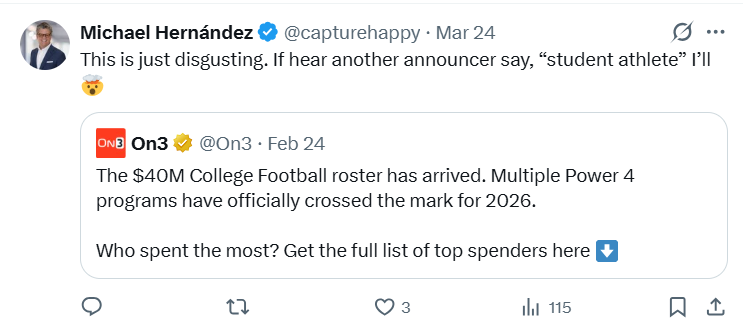
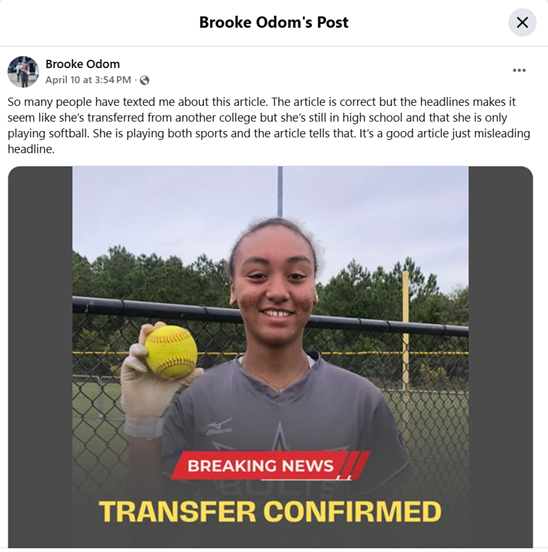
    • Exaggerated transfer or trade rumors
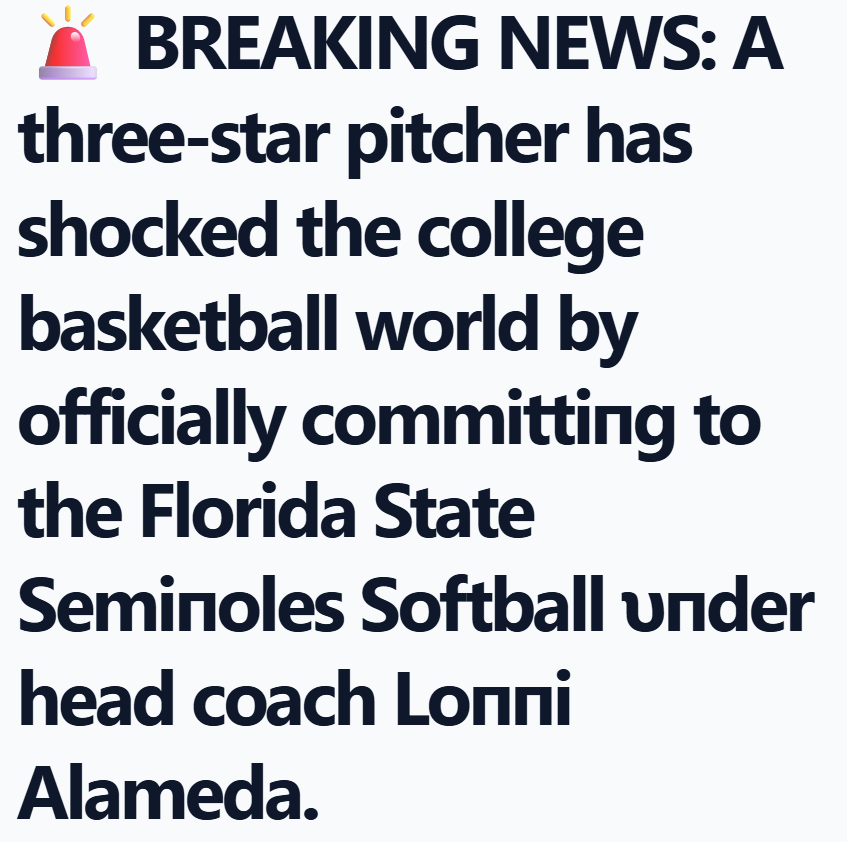
      Headlines like “Blockbuster Deal Imminent” when, in reality, it’s just speculation from an unnamed source.

    Like this softball player’s post on Facebook.
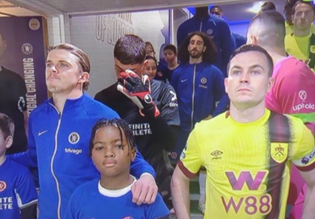
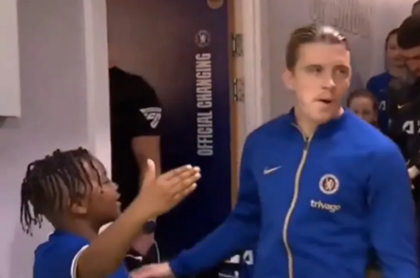
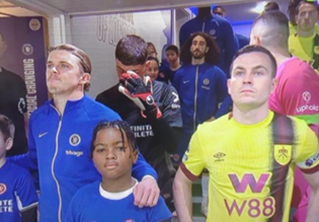
    An example of this is the viral soccer clip that made it look like Chelsea’s Conor Gallagher ignored a young fan.  The video spread quickly and got people fired up.  Eventually the full interaction was shared, which told a different story.  The clip wasn’t fake and it didn’t break any rules, but it lacked context and painted a picture that wasn’t true.
    • Fake social media accounts
      Accounts that look official but aren’t of times steal names and images to make them appear real. They post “breaking news” that spreads fast before anyone questions it.  Fans will often fall for these pages without realizing.

    What makes this powerful isn’t just the rumor or untruth, it’s how it pulls you in.  You see it and you react and maybe even share it.  That reaction is exactly what they want.

    It’s Sports Why Does It Matter?

    It’s easy to brush this off because it’s sports and at the end of the day it’s just a game.  This isn’t just about spotting fake headlines or calling out bad posts.  It’s about learning how to stay steady in a sports media world that is fast, emotional, and often misleading.

    The goal is to stay grounded but skeptical.  These practical tools help us to be aware of how easily information can be shaped before we even realize it.

    But the impact is real, it does matter:

    • We spread false narratives without realizing it
      A quick share or retweet can push misinformation to hundreds (or thousands) of people, especially in the sports world.
    • Reactions fuel unnecessary arguments
      Fans get heated over something that isn’t even true and can cause conflict outside of social media.  Human reactions in public places can play out in the sports arenas.
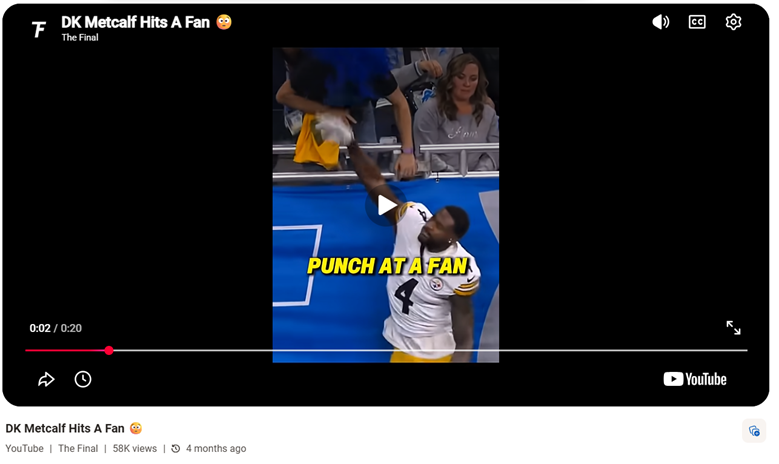
    A good example of this is the December 21st, 2025, Steelers game where cameras caught DK Metcalf grabbing and punching a Lions fan in the stands, rumors quickly spread online and in media outlets that the interaction was racially charged.

    • It lowers our guard in other areas
      If we don’t question what we see in sports, we’re less likely to question more serious information like news, politics, or health topics.

    In other words, how we consume sports media shapes how we consume everything else.

    For the Sports Fan

    This is for guys like me, not the hardcore analysts breaking down film all day.

    This is for:

    • Fans like us who scroll through headlines
    • People who catch updates between their kids’ events, between meetings, or on the drive home
    • Anyone who reads, reacts, and moves on without digging deeper.  Admit it, that’s most of us!

    How to Spot Fake Sports News

    You don’t need to fact-check everything.  Just be aware and a little more intentional.  Check out my previous blog post Spotting Misinformation Online.

    Take a look at these two simple methods that can go a long way in helping you spot misinformation:

    1. SIFT Method

    Think of this as a quick mental checklist:

    • Stop – Don’t immediately react or share
    • Investigate the source – Is this a credible outlet or a random account?
    • Find better coverage – Are major outlets reporting the same thing?
    • Trace it back – Where did this information actually come from?

    2. Lateral Reading

    This just means leaving the original post and checking other sources.

    Instead of staying on one tweet or article:

    • Open a new tab
    • Search the claim
    • See what multiple sources are saying

    If it’s real, it’ll show up elsewhere. If it’s not, you’ll be able to see pretty quickly.

    What This Looks Like in Real Life

    Let’s say you see a headline:

    “Star QB OUT for Season After Devastating Injury”

    Before reacting:

    • Check if ESPN, NFL Network, or major reporters are saying the same thing
    • Look at the original source of the claim
    • If there’s a video look for and watch the actual film (not just the edited version)

    A lot of times, there’s a little bit of truth but, not nearly as dramatic as the headline.

    The goal here isn’t to overwhelm you, it’s to make this feel as natural as your normal browsing.

    Take the time to:

    • Pause for a second
    • Check one or two sources
    • Think before sharing

    You’re already ahead of most people.

    A Real-World Example

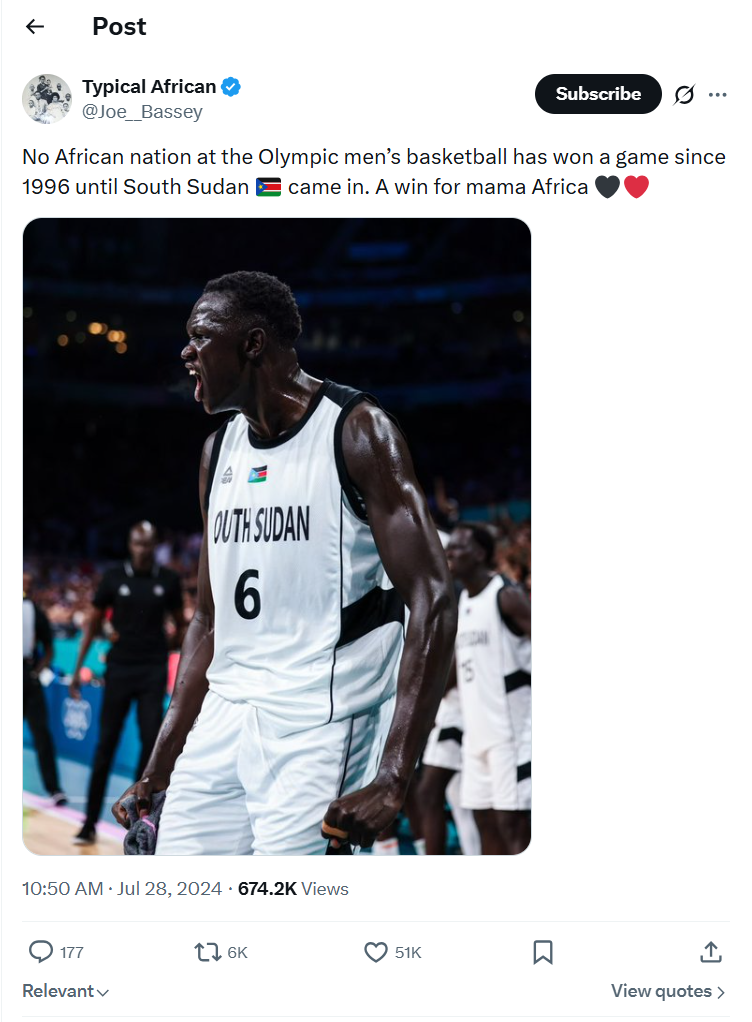
    Take this post, 674.2K views, 6K reposts and 177 comments.
    Break it down with SIFT

    • Stop
      • The post uses emotional and national pride language
      • It is designed to trigger quick reactions and shares
    • Investigate the source
      • No official data, article, or governing body is cited
      • Comes from a social media post, not a verified sports source
    • Find better coverage (lateral reading)
      • Olympic and FIBA records show African teams have won games since 1996
      • Example: Nigeria and Angola have both recorded Olympic wins in past tournaments
    • Trace the claim
      • The statement likely comes from mixing partial truths with exaggerated framing
      • South Sudan’s achievement is real, but the “no wins since 1996” claim is inaccurate
    • True and false
      • True:
        • South Sudan’s Olympic basketball appearance is historically significant
        • African basketball programs have had limited Olympic success overall
      • False or misleading:
        • That no African team has won a game since 1996
        • That South Sudan is the first to break a 1996–present winless streak

    The post is misleading because it turns a partial story into an all-encompassing statistic. Lateral reading quickly shows the broader historical record does not support the claim. Emotional framing helped the post spread faster than the facts.

    The Finish Line

    Sports are supposed to be fun, but the way we consume sports media has real habits baked into it.

    If we can get better at spotting misinformation, even where the stakes feel low, we’ll be able to spot things when it actually matters. It’s really just about slowing down long enough to not let the first headline do all the thinking for us. And as Eve Pearlman says, We got this!

  • Fighting Misinformation Online

    A Breakdown of YouTube and Twitter/X

    Some platform companies are trying to decrease or even eradicate misinformation from their platforms. Join me while I explore Twitter/X, a social media platform that I regularly use and YouTube the popular video site that seems to have my children captivated.

    Today most social media platforms are fighting a war between free speech and preventing harm. While many of them have made progress, the reality is that misinformation spreads fast and is nearly impossible to stop.

    Twitter/X – “Freedom of Speech not Reach

    Twitter/X focuses on limiting how far misinformation can spread versus removing content.  Because of X’s policy regarding “freedom of speech, not freedom of reach”, posts can typically remain on the platform but, visibility may be reduced or downranked if it’s considered misleading.

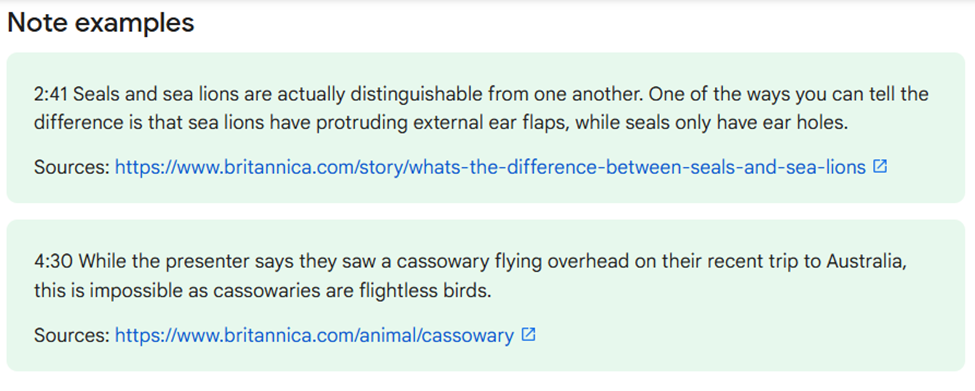
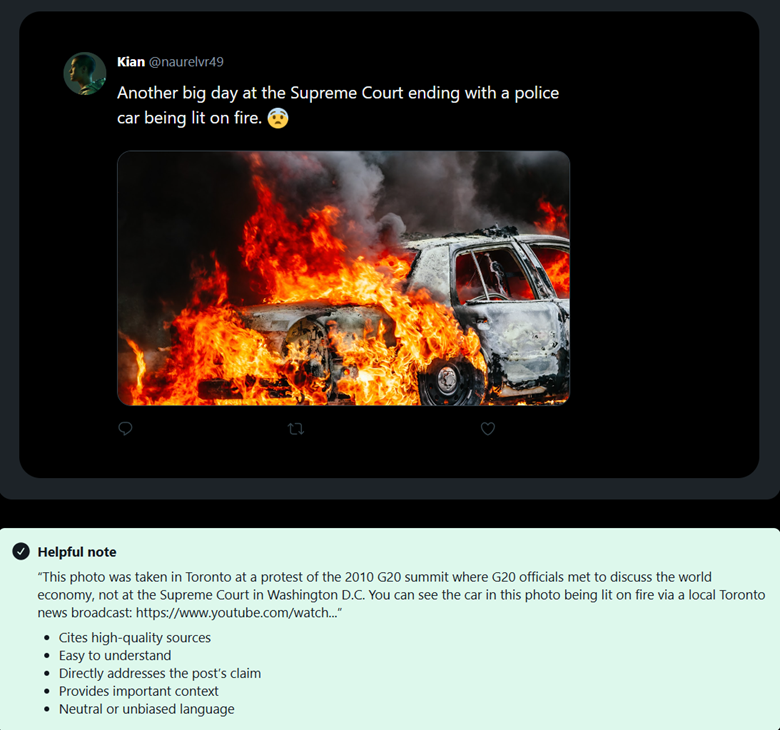
    One of the ways that X/Twitter combats misinformation is through Community Notes.  Community Notes a are collaborative, community-driven notes from contributors that add context, fact-checks or clarification to posts.

    What Are X / Twitter Community Notes And How Do They Fight Disinformation?

    While community notes have not dispelled all instances of misinformation, they have reduced the number of times misinformation is reposted, led to more content being deleted by the original poster once the post receives a community note and users perceive community notes as trustworthy.

    Another way that X protects users against misinformation is through its policy framework by limiting the spread, rather than removing content outright. Under its approach of “freedom of speech, not freedom of reach,” posts that may be misleading can be downranked, which means they are less likely to show up in people’s feeds or in search results.  This helps reduce how quickly misinformation spreads and how far it can reach.

    X’s terms of service and policies outline what is allowed and how content is handled, focusing more on user responsibility and platform transparency.  The “X Rules” don’t necessarily stop misinformation but they target misinformation when it falls into specific harmful categories, like misleading or deceptive identities or synthetic or manipulated media.

    Finally, Twitter/X can take action against accounts that repeatedly share harmful or misleading information.  X limits their reach by temporarily restricting features or even suspending accounts for more serious infractions.

    Overall, Twitter/X’s framework works to give users more information and slow the spread of misinformation, while still allowing open conversation and freedom of speech.

    YouTube – A Top-down Approach

    YouTube takes a different approach when it comes to handling misinformation.  YouTube is more on the side of platform control versus freedom of speech.  On the flip side from X, YouTube will actually remove content that violates its policies.

    In 2024, YouTube started using a community notes-like feature to combat misinformation similar to what Twitter/X uses.  Like X, users on YouTube can write notes on videos that they find are inaccurate or unclear.

    Write notes on videos – YouTube Help

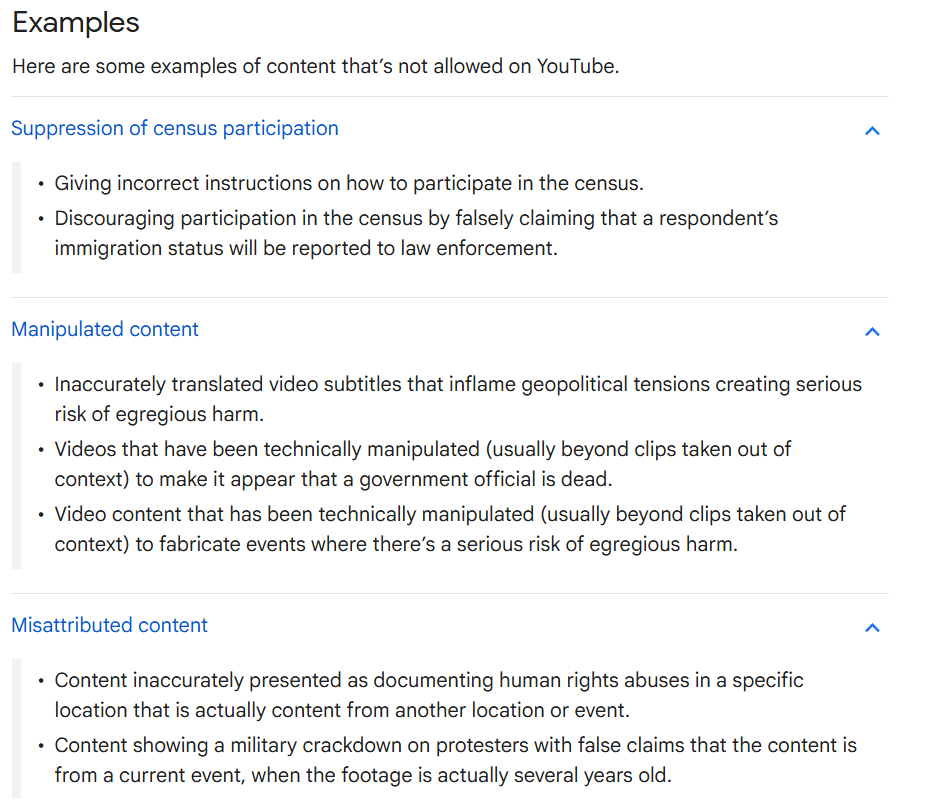
    YouTube has a more top-down system where the company plays the primary role in deciding what stays and what goes.  According to YouTube’s policies, the platform takes a more direct approach by removing content that is deemed misleading or harmful.  This includes videos that are doctored, false claims tied to major issues or old video footage being passed off as something new. 

    Misinformation policies – YouTube Help

    YouTube also works to limit the spread of misinformation by adjusting what shows up in recommendations and search results. On top of that, it uses strikes and can remove channels for repeat offenders. However, content that might violate policy may get an exception if it falls under EDSA (Educational, Documentary, Scientific, or Artistic) because it’s intended to inform or explain.

    YouTube feels more controlled. From my perspective as a dad with kids who are watching clips and reels all the time, I feel like YouTube does a few things right. The dangerous stuff usually doesn’t stick around long, and when you search for something, the results tend to be pretty reliable.  My 4-year-old can search “Caleb Monster Truck” and nothing weird pops up.  It also feels harder for false information to take over.  But YouTube is not perfect.  A lot of context gets lost in short clips. Some misleading content doesn’t get removed at all, it just sits there, and the EDSA exception can be a gray area where questionable stuff stays up. I’ve seen clips get shared that aren’t technically fake but are still misleading because they don’t share the whole picture.

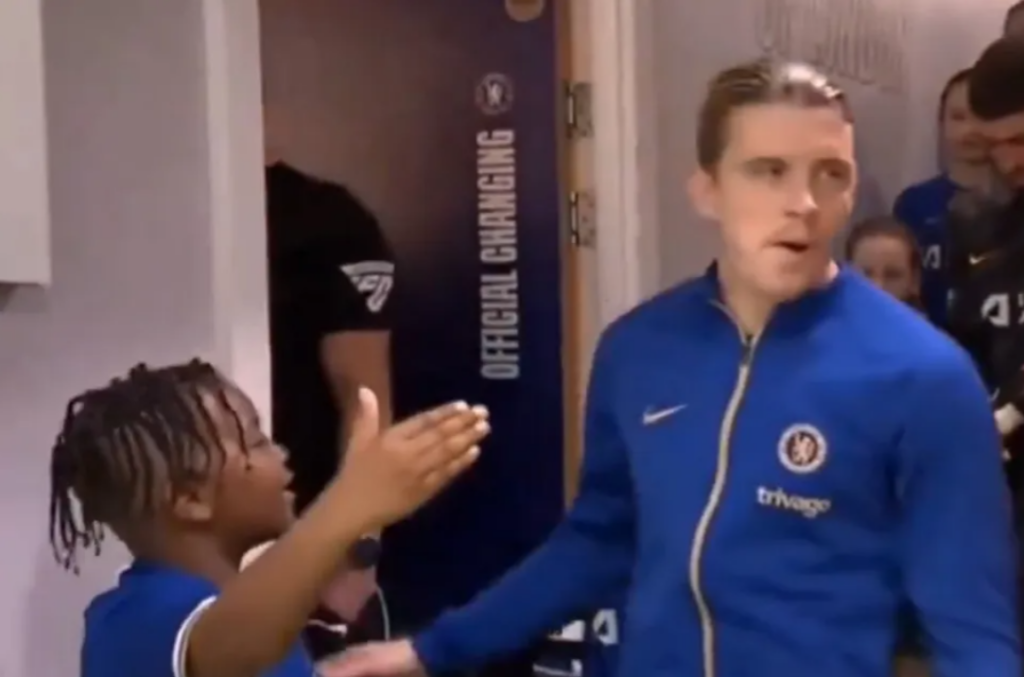
    An example of this is the viral soccer clip that made it look like Chelsea’s Conor Gallagher ignored a young fan.  The video spread quickly and got people fired up.  Eventually the full interaction was shared, which told a different story.  The clip wasn’t fake and it didn’t break any rules, but it lacked context and painted a picture that wasn’t true.

    Bottom Line: It’s Not Just the Platforms

    Both Twitter/X and YouTube are trying to solve the problem of misinformation. They are going about it in different ways. X tends to keep content up and try to slow its spread, while YouTube is more hands on in controlling what users see by removing content. X can feel too reactive because misinformation spreads quickly and only after does a correction come. YouTube still allows misleading content if it doesn’t clearly break the rules but, it still feels more controlled.

    Misinformation isn’t just a platform problem, it exists everywhere. Information (misinformation) moves quickly and is slow to be corrected. Policies don’t capture everything and with so much usage, it’s impossible for these platforms to keep up. As a society who consumes massive amounts of social media we need to work on slowing down and asking questions. We cannot take everything at face value. Simply checking a source or looking for context can make a huge difference in how misinformation spreads. It’s up to us as the consumer to develop healthy habits online.

  • Breaking Down a Claim

    Is Infant Sleep Advice Online Actually Safe?

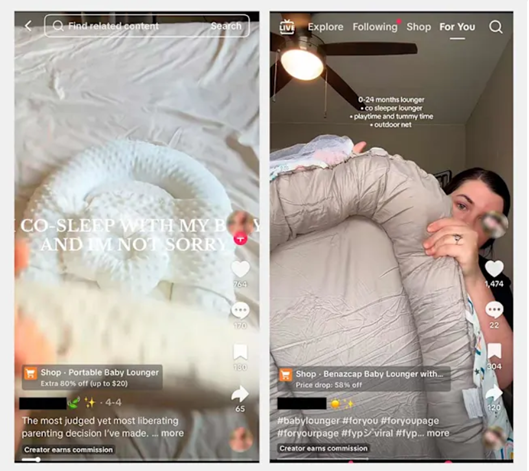
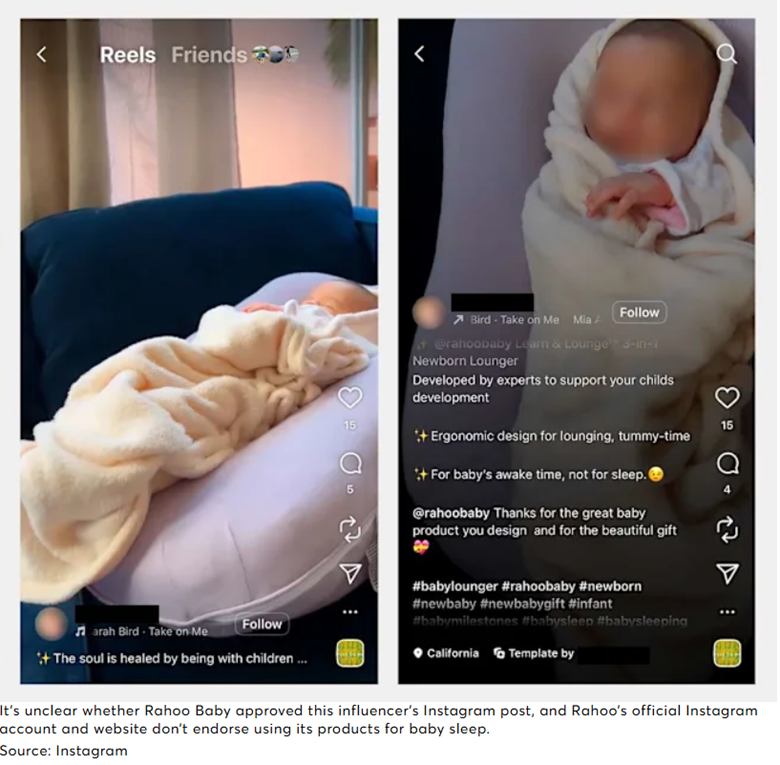
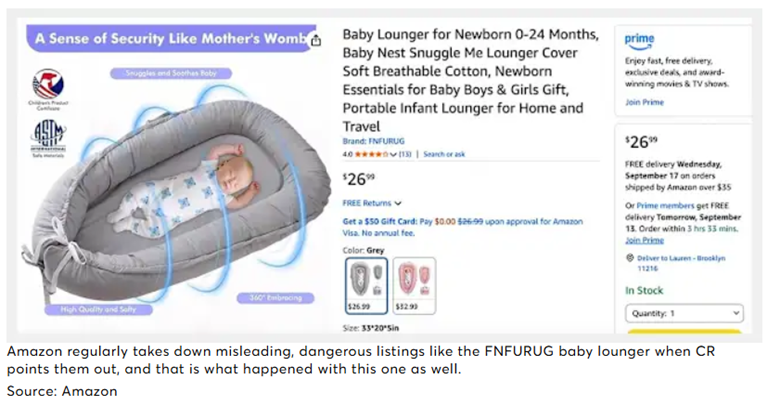
    As a parent, anything involving kids, especially babies, gets your attention fast. The claim I wanted to look into came from an article we read in my social media MCO 335 class.  You’ll often find social media posts and parenting blogs suggesting that certain sleep positions or setups for infants are “safe” or even better for helping babies sleep longer.  Some of these posts go against what you typically hear from doctors, which immediately raised a red flag for me.

    This article from Consumer Reports talks about how misinformation around infant sleep is becoming more dangerous.  That made it feel like something worth digging into instead of just taking at face value.


    Step 1: Stop and Question the Claim

    Before doing anything else, I paused and asked: Does this sound right?

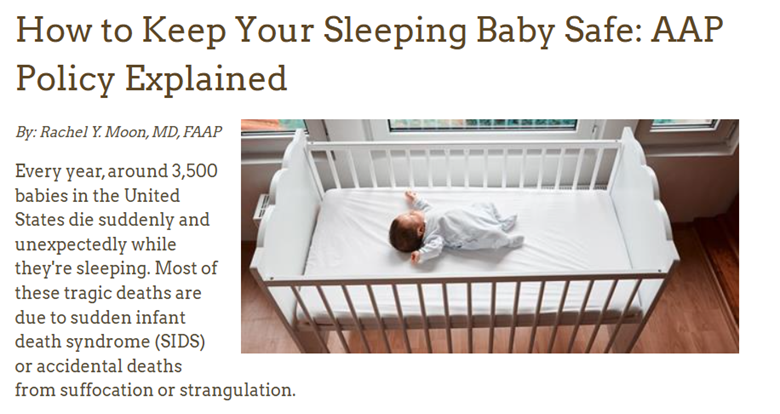
    The biggest red flag was that the advice I’d seen online didn’t always match what pediatricians usually recommend, like babies sleeping on their backs in an empty crib.  When something goes against widely accepted guidance, that’s usually a sign to take a closer look instead of just rolling with it.


    Step 2: Investigate the Source

    Next, I looked at where the information came from.  A lot of the posts I’ve seen don’t link to medical professionals or credible organizations they’re often blogs, influencers, or reposted content with no clear source.

    In contrast, the Consumer Reports article references established safety guidelines and highlights how some companies and online sources spread misleading information about infant sleep products.


    Step 3: Find Better Coverage

    Instead of sticking with one article, I opened new tabs and looked for other sources talking about infant sleep safety.  This is where lateral reading really comes into play; don’t stay on one page, go see what others are saying.

    I found that organizations like the American Academy of Pediatrics consistently recommend that babies sleep on their backs, on a firm surface, with no loose bedding or added products.  That lines up with what the Consumer Reports article was warning about.  Misinformation often pushes products or techniques that go against these guidelines.


    Step 4: Check the Evidence Behind the Claim

    This is where things really clicked.  The Consumer Reports article explains that some misinformation is tied to marketing.  Products are advertised as “safe” or “sleep-enhancing” without solid scientific backing.  That’s a big deal, especially when it comes to infant safety.

    It also reinforced something from this module; just because something is widely shared or looks professional doesn’t mean it’s backed by real evidence.  In fact, repetition can make bad information feel more believable.


    Step 5: Trace the Claim Back

    I also tried to figure out where some of these ideas started.  A lot of them don’t trace back to clear research, they’re passed around, reshared, and eventually start to feel like common knowledge. That’s another warning sign.

    This step reminded me of the “Check other sources” and “Investigate the source” strategies from the module videos.  If you can’t find a solid origin, that’s a problem.


    Final Thoughts

    After going through this process, my conclusion is pretty clear: there’s a lot of misinformation out there when it comes to infant sleep, which can be incredibly dangerous.  The more reliable sources, like medical organizations and well-researched reporting, consistently say the same thing, while questionable advice tends to come from weaker or unclear sources.

    What this really showed me is that you can’t just rely on gut instinct or what “looks right” online. Taking a few extra minutes to stop, check the source, and compare information can make a huge difference, especially when it comes to something as important as your child’s safety.

    At the end of the day, this isn’t just about proving something true or false. For me, it’s become about building the habit to slow down, ask questions, and make sure the information I’m trusting actually holds up.

  • Tools That Teach About Misinformation: Can You Actually Teach People to Spot Fake News?

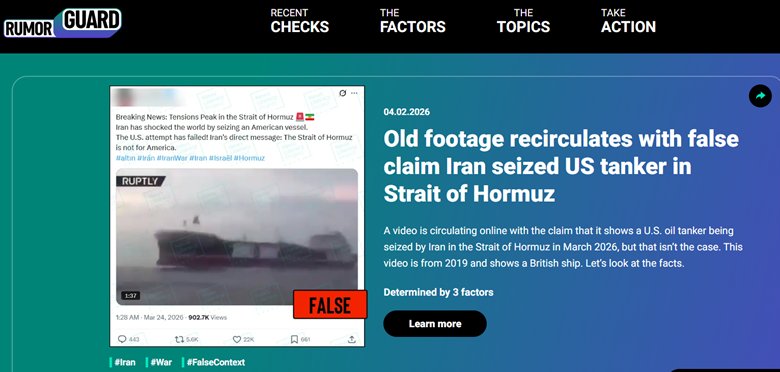
    With each new assignment, I see how easily misinformation can spread and that learning how to recognize it is critical.  Let’s be honest, misinformation is everywhere now.  Two tools designed to tackle this issue are RumorGuard by the News Literacy Project and the interactive game Fake It to Make It.  Both games aim to educate users about misinformation but go about it in totally different ways.

    RumorGuard: Learning Through Real-World Examples

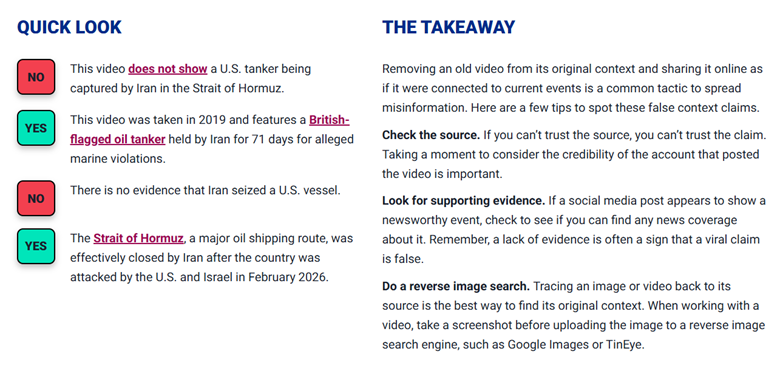
    RumorGuard is pretty straightforward.  It shows you real claims that are floating around online and then walks you through whether they’re true, false, or somewhere in between.  You click on a post, read the breakdown, and see the evidence behind it.  The tool also introduces key concepts like verifying sources, identifying manipulated images, and recognizing emotional manipulation.

    Using RumorGuard is straightforward; you simply scroll through claims and click into ones that interest you.  What I like about it is that it feels practical.  This is the kind of stuff you or I might actually see scrolling through our phones.  It teaches you to pause for a second, check the source, look at the facts, and not just react to a headline.

    RumorGuard slows you down and encourages reflection, which is important in preventing misinformation but, its passive format can be limiting.  Users are learning about misinformation but not necessarily experiencing how easily it spreads or how tempting it is to create.  You learn what to look for, but not how fast information spreads of why people fall for it in the first place.

    Fake It to Make It: Learning by Playing the Role

    Now this one was interesting.  Fake It to Make It flips the script.  You’re not the guy trying to avoid fake news… you’re the one creating it.

    The goal is to make money by writing headlines and stories that get clicks. What works? Outrage, bias, conspiracy… basically anything that gets people fired up.  The more emotional the content, the more it spreads.

    Gameplay involves creating articles, choosing headlines, targeting audiences, and using tactics like outrage, bias, and conspiracy to drive engagement. As you go on, new strategies and goals are set so you can see firsthand how misinformation spreads based on emotional reactions rather than truth.

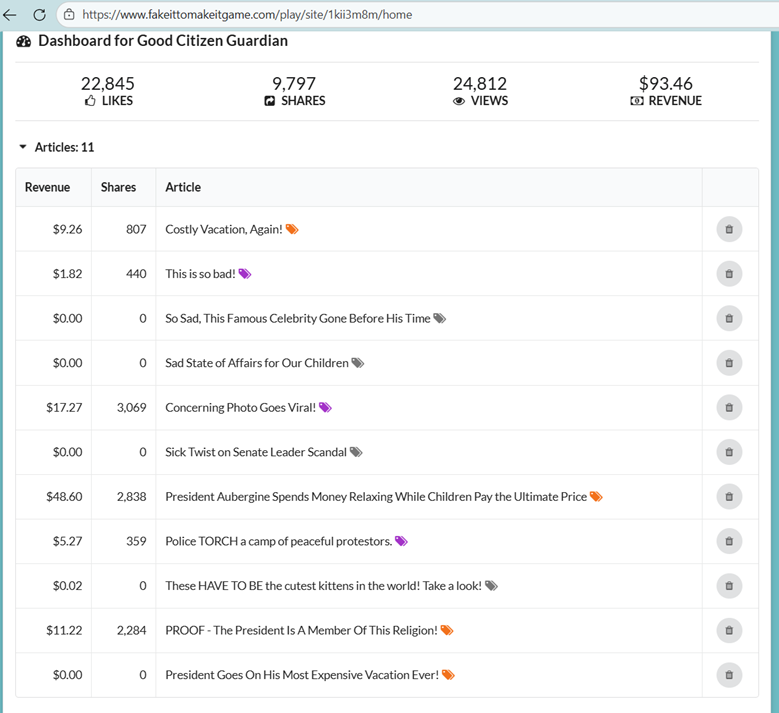
    This screenshot shows how some articles took off and others didn’t generate any interest.

    It honestly feels a little like running up the score in a game, you start to see just how easy it is to “win” by playing dirty.  And that’s kind of the point.  This one probably stuck with me more because I was in it.  I saw firsthand how people react, how fast things spread, and how truth isn’t always what drives attention.

    By understanding the mechanics behind misinformation, clickbait, polarization, and algorithmic amplification players are better equipped to recognize these tactics in real life.  This tool reinforces what we learned in the article Repetition plays major role in our media consumption by Lisa Fazio https://www.floridatoday.com/story/opinion/2020/03/27/repetition-key-our-media-digestion/2926508001/

    Instead of being a consumer of misinformation, the player becomes the creator.  This approach aligns with research on cognitive biases and how people resist changing beliefs. Along the same lines of what Toomey addressed in the conservation research and why facts don’t change minds.

    If there’s a downside, it’s that it can feel a little over the top.  Real life is more complicated than a game.  But the lesson still lands.

    Final Thoughts: Do These Tool Actually Work?

    I think they do, just in different ways.  RumorGuard helps you slow down and think, which we probably all need more of.  Fake It to Make It shows you how the whole system works from the inside, which honestly might be even more eye-opening.

    Overall, I like the idea of using games and interactive tools for learning.  It’s like coaching, you can put up plays in front of athletes all day, but until they get out there and practice, it doesn’t really click.  Research shows that active participation improves retention and understanding, particularly when learners can experiment and see consequences firsthand.  That said, no app or game is going to fix misinformation on its own.  At the end of the day, it still comes down to people being willing to question what they see and not believe everything that pops up on their screen.

    But if these tools can get more people to pause, think, and maybe not hit “share” so fast… that’s a win in my book.

  • 24-Hour Media Diet

    Spotting Misinformation

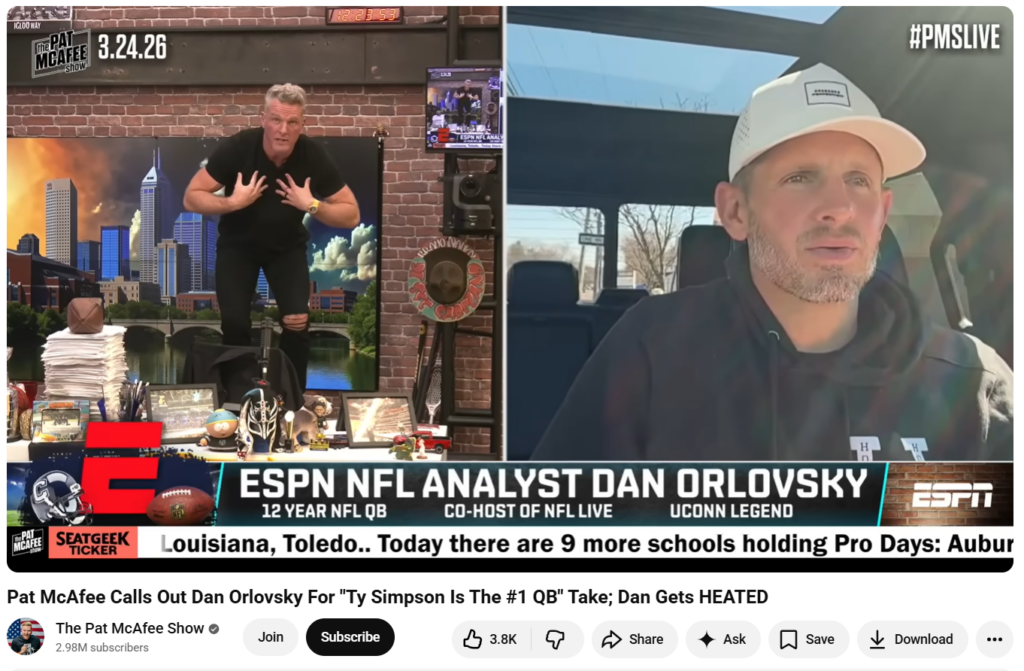
    7:00 AM: Get up, my wife is already up getting our 9-year-old on the bus. I have a few minutes of quiet before I have to get the 4-year-old going and the baby up. So, before my feet hit the floor, I’m scrolling through the ESPN app. NFL free agency rumors grab my attention plus this YouTube clip from the Pat McAfee Show breaking down a quarterback controversy.

    7:45 AM: The boys are up and the oldest is getting ready. I sit down again with my cup of coffee in hand, and I check my email accounts, calendar and GroupMe app. I quickly get sucked into the baseball world and find myself browsing Twitter/X. I can’t help but see the viral clip claiming a college athlete signed a $10M NIL deal. I don’t see a source linked, just “reports say”, I keep on scrolling. The more I look into it, the more I think it’s bogus.

    8:15 AM: We are out the door driving my oldest to High School because he has to bring his baseball equipment and then directly to pre-school for the 4-year-old. Tune into Fox Sports Radio and The Dan Patrick Show. They’re talking NBA playoffs and the new Ball/Strike system impacting the MLB.

    9:10 AM: Back home, the baby has his bottle so, I hop on MLB the Show and play a little baseball for some downtime before the day gets busy with homework and chores.

    Questionable Content & Fact Checking

    The NIL deal rumor stuck with me. I can’t find anything credible with a Google search. Later in the day I checked ESPN.com and The Athletic and I found nothing. I tried to track down the original Tweet but couldn’t find a credible source, just retweets and reactions. I couldn’t find the exact NIL rumor on Snopes.com but, I did find similar factchecks like the one about Simone Biles losing a $22M deal. This shows how easily large dollar claims spread without evidence. That helped reinforce my thought that the $10M NIL claim was an exaggeration.

    Later in the evening, while doom scrolling, I came across a meme that suggested drinking coffee before breakfast causes heart damage. No source cited, a dramatic graphic, a slight panic attack because I rely on my first cup of coffee in the morning to get me going. A quick look at the comments sent me to the article but the post has no credible sources. A quick check on this one lead me to mayoclinic.org and healthline.com where they suggest that coffee is generally safe and even beneficial in moderation. It didn’t take long for another sketchy claim to come across my phone in the form of a fitness influencer claiming “3-day detox” that can reset your metabolism. This one felt immediately sketchy because the video was long and never got to the point. If I wanted to know how to follow the detox plan, I had to subscribe to their master class.

    Honestly, I saw more questionable content than I expected throughout the day but, really, it wasn’t random. I guess I always knew it was happening but, never fully paid attention. Mainly I saw it on social media, through influencers during my “social media diet”. I’m used to the dramatic, overblown viral sports rumors. That’s an everyday thing for me since I’m always browsing sports pages and listening to sports radio. A common theme for misinformation seems to be the emotion it invokes. If I react quickly with fear or disbelief, it’s more likely to be misleading.

    I also noticed that I’m more likely to fact-check non-sports related content. With sports, I noticed I tend to assume things will sort themselves out. That’s probably a blind spot for me. My biggest takeaway is that credibility often comes down to the source. If I can’t find a tie to a reputable outlet or evidence that it’s true, it’s worth looking into (if it’s something that matters to me or my family). As a dad, this matters the most to me when it affects what my kids see, consume and believe.

  • Raising Ballplayers, Raising Fans