With each new assignment, I see how easily misinformation can spread and that learning how to recognize it is critical. Let’s be honest, misinformation is everywhere now. Two tools designed to tackle this issue are RumorGuard by the News Literacy Project and the interactive game Fake It to Make It. Both games aim to educate users about misinformation but go about it in totally different ways.
RumorGuard: Learning Through Real-World Examples
RumorGuard is pretty straightforward. It shows you real claims that are floating around online and then walks you through whether they’re true, false, or somewhere in between. You click on a post, read the breakdown, and see the evidence behind it. The tool also introduces key concepts like verifying sources, identifying manipulated images, and recognizing emotional manipulation.
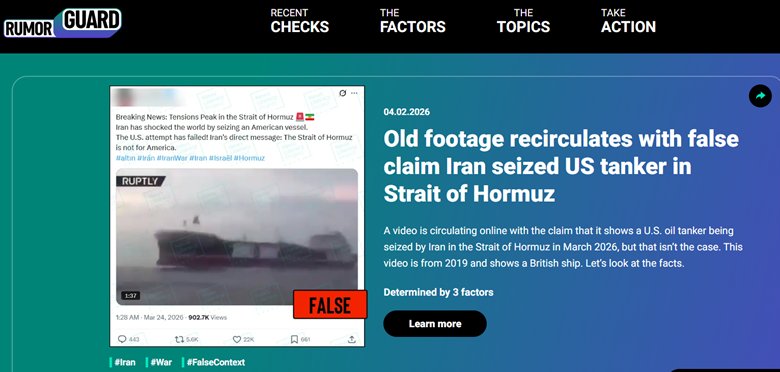
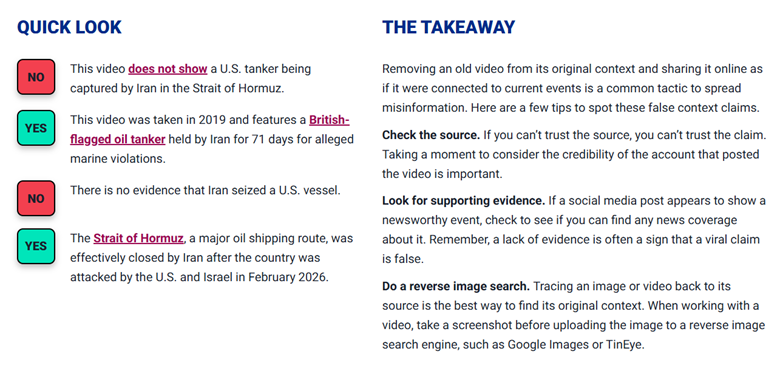
Using RumorGuard is straightforward; you simply scroll through claims and click into ones that interest you. What I like about it is that it feels practical. This is the kind of stuff you or I might actually see scrolling through our phones. It teaches you to pause for a second, check the source, look at the facts, and not just react to a headline.
RumorGuard slows you down and encourages reflection, which is important in preventing misinformation but, its passive format can be limiting. Users are learning about misinformation but not necessarily experiencing how easily it spreads or how tempting it is to create. You learn what to look for, but not how fast information spreads of why people fall for it in the first place.
Fake It to Make It: Learning by Playing the Role
Now this one was interesting. Fake It to Make It flips the script. You’re not the guy trying to avoid fake news… you’re the one creating it.
The goal is to make money by writing headlines and stories that get clicks. What works? Outrage, bias, conspiracy… basically anything that gets people fired up. The more emotional the content, the more it spreads.
Gameplay involves creating articles, choosing headlines, targeting audiences, and using tactics like outrage, bias, and conspiracy to drive engagement. As you go on, new strategies and goals are set so you can see firsthand how misinformation spreads based on emotional reactions rather than truth.
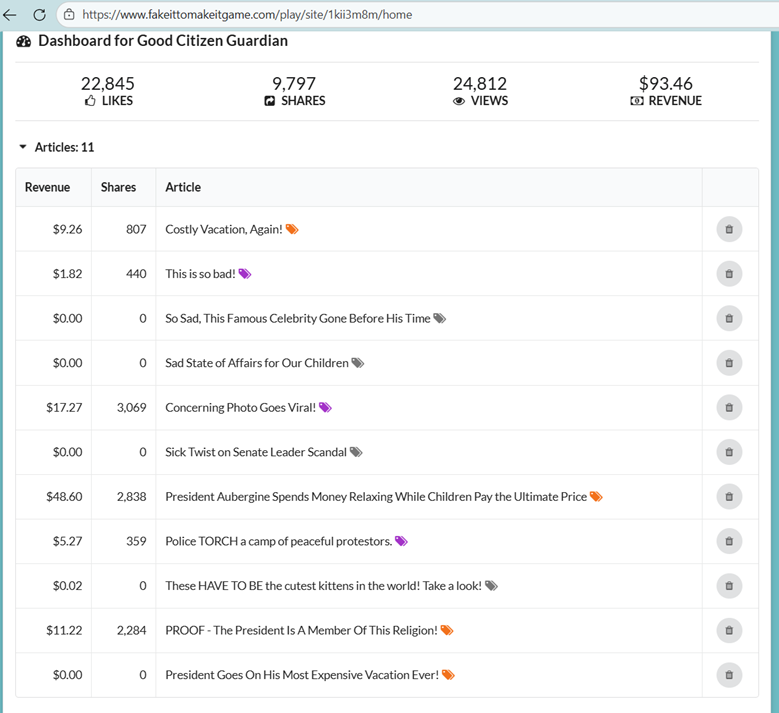
This screenshot shows how some articles took off and others didn’t generate any interest.
It honestly feels a little like running up the score in a game, you start to see just how easy it is to “win” by playing dirty. And that’s kind of the point. This one probably stuck with me more because I was in it. I saw firsthand how people react, how fast things spread, and how truth isn’t always what drives attention.
By understanding the mechanics behind misinformation, clickbait, polarization, and algorithmic amplification players are better equipped to recognize these tactics in real life. This tool reinforces what we learned in the article Repetition plays major role in our media consumption by Lisa Fazio https://www.floridatoday.com/story/opinion/2020/03/27/repetition-key-our-media-digestion/2926508001/
Instead of being a consumer of misinformation, the player becomes the creator. This approach aligns with research on cognitive biases and how people resist changing beliefs. Along the same lines of what Toomey addressed in the conservation research and why facts don’t change minds.
If there’s a downside, it’s that it can feel a little over the top. Real life is more complicated than a game. But the lesson still lands.
Final Thoughts: Do These Tool Actually Work?
I think they do, just in different ways. RumorGuard helps you slow down and think, which we probably all need more of. Fake It to Make It shows you how the whole system works from the inside, which honestly might be even more eye-opening.
Overall, I like the idea of using games and interactive tools for learning. It’s like coaching, you can put up plays in front of athletes all day, but until they get out there and practice, it doesn’t really click. Research shows that active participation improves retention and understanding, particularly when learners can experiment and see consequences firsthand. That said, no app or game is going to fix misinformation on its own. At the end of the day, it still comes down to people being willing to question what they see and not believe everything that pops up on their screen.
But if these tools can get more people to pause, think, and maybe not hit “share” so fast… that’s a win in my book.
Leave a Reply